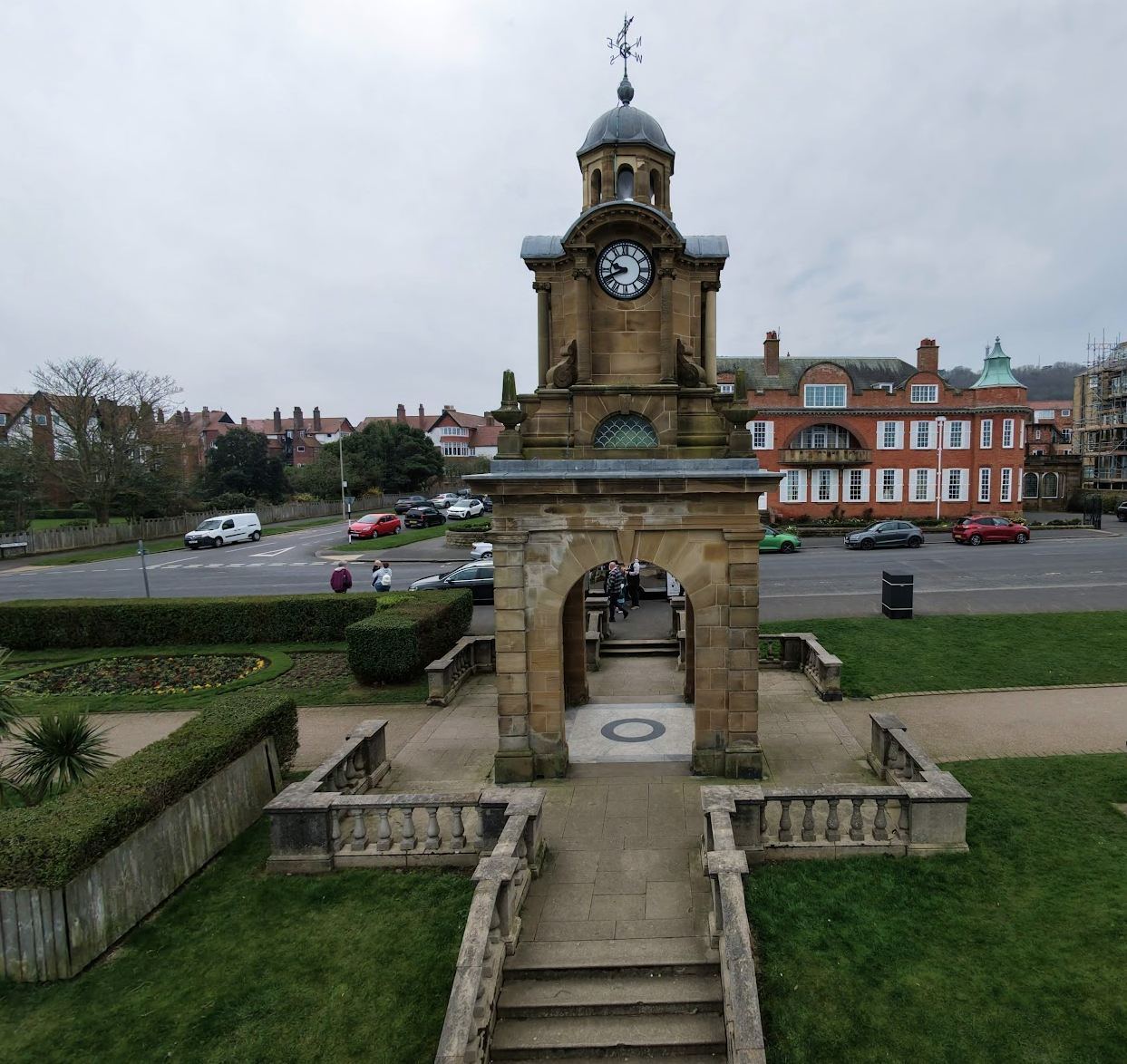
Perched prominently on the South Cliff Esplanade, the Scarborough Clock Tower stands as a resolute guardian of the Yorkshire coastline. More than just a timekeeping device, this Grade II listed landmark is a piece of Edwardian elegance that has survived coastal gales and wartime alerts alike.
A Royal Beginning
The tower was built in 1911 to commemorate the coronation of King George V. While many towns put up plaques or statues, Scarborough received this grand architectural statement thanks to the local businessman and philanthropist Alfred Shuttleworth.
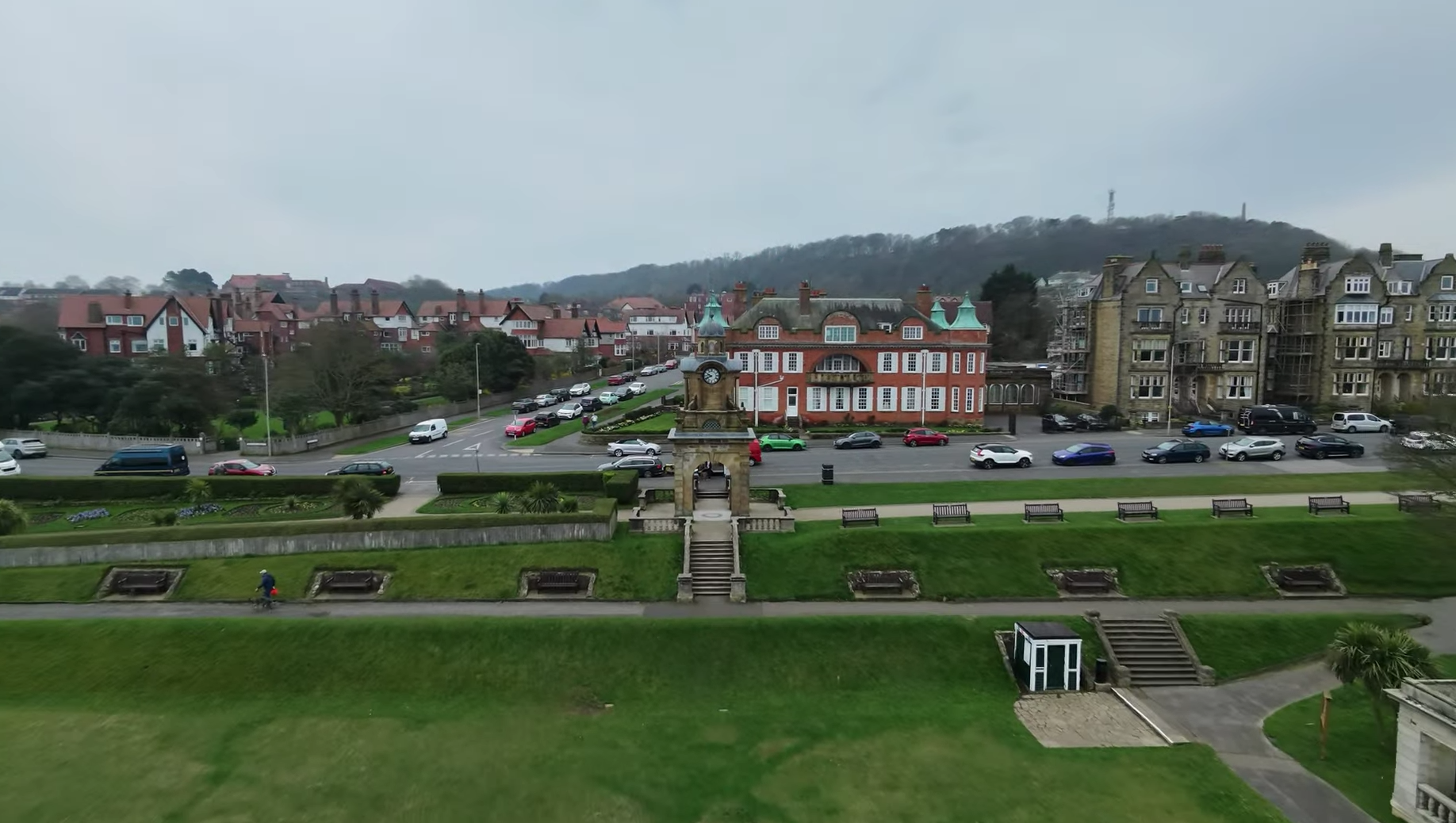
Shuttleworth was a fascinating character; he lived at "Red Court," the large house directly opposite the tower. Interestingly, he was so protective of his view that he reportedly bought and demolished a neighbouring house just to ensure he could see the sea and his tower clearly.

Architecturally "Mysterious"
The design of the tower is often described as "Wren-style," inspired by the Baroque elegance of Sir Christopher Wren (the man behind St. Paul’s Cathedral). While it looks like a masterpiece from a centuries-old era, it was actually designed by Harry W. Smith, the Borough Engineer at the time, who was a close friend of Shuttleworth.
The structure features four clock faces framed by Ionic columns and is topped with a distinctive lead-clad lantern and a weather vane that has weathered over a century of North Sea salt spray.
5 Fast & Interesting Facts
-
The Trapped Winder: Before the clock was electrified in the 1960s, it had to be wound by hand. Legend has it a council worker once got stuck inside the tower overnight after his ladder slipped!
-
A "Royal" Screen Star: If the tower looks familiar to TV fans, it’s because it featured heavily in the ITV period drama The Royal, which used the Esplanade and nearby buildings as its primary filming location.
-
The Silent Chime: The clock was originally built with a chime that rang on the hour, though it has been silenced at various points in history to keep the peace for nearby residents.
-
Precision Engineering: The clock mechanism itself was manufactured by the famous William Potts & Sons of Leeds, a firm that provided clocks for cathedrals and town halls across the British Empire.
-
Freshly Restored: As of early 2026, the tower has recently undergone a significant restoration to its lead roof and stonework, meaning your drone footage is capturing it in its best condition for decades.
The Heart of the South Cliff
Today, the tower acts as the gateway to the Italian Gardens and South Cliff Gardens. For drone pilots, it offers one of the most symmetrical and satisfying subjects in North Yorkshire, standing as a bridge between the town’s Victorian heyday and the modern seaside experience.